
Hologram technology has captured the public imagination for decades. From science fiction films to cutting-edge exhibitions and immersive marketing experiences, holographic displays have long been associated with futuristic communication.
Today, holographic technologies are becoming increasingly practical for real-world environments. Advances in display technology, digital rendering and artificial intelligence are enabling organisations to create immersive holographic experiences for museums, exhibitions, retail environments and corporate communication.
However, the term “hologram” is often used to describe a wide range of different technologies. Some systems create simple floating visual effects, while others combine artificial intelligence with holographic displays to create interactive digital humans capable of communicating with audiences in real time.
Understanding the different types of hologram technology helps organisations choose the right solution for their communication goals.
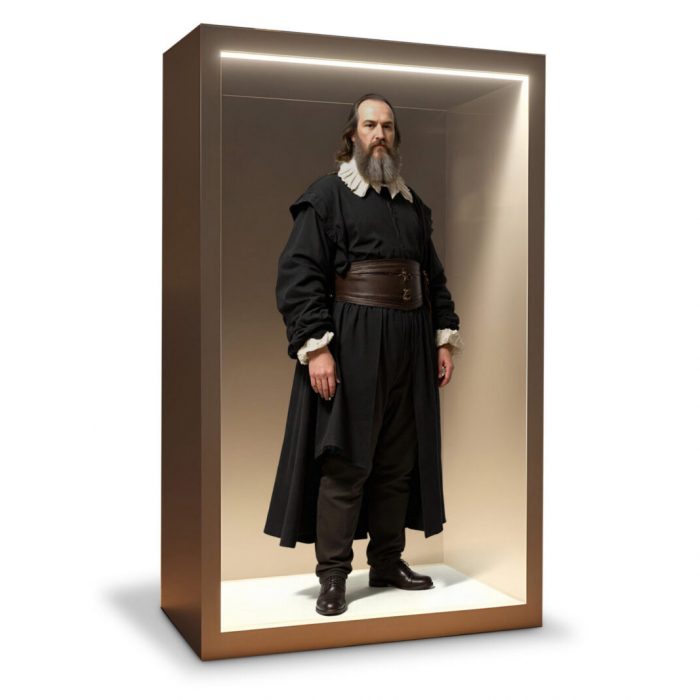
One of the most advanced forms is human holograms, which combine visual display with AI interaction.
Hologram technology refers to methods of creating images that appear three-dimensional and visible in space, allowing viewers to perceive depth and perspective without the need for special glasses.
Traditional holography uses laser light interference patterns to record and reconstruct images that appear three-dimensional.
Modern holographic display systems often use advanced projection or display techniques to simulate holographic effects that appear similar to true holograms.
According to the EBSCO, holography is a technique that records the light field of an object to produce an image that appears three-dimensional when illuminated properly.
While scientific holography remains important in research fields, most commercial hologram installations use specialised display technologies that simulate holographic effects for communication and entertainment.
Holographic displays are becoming more common because they provide a powerful combination of visual impact and immersive communication.
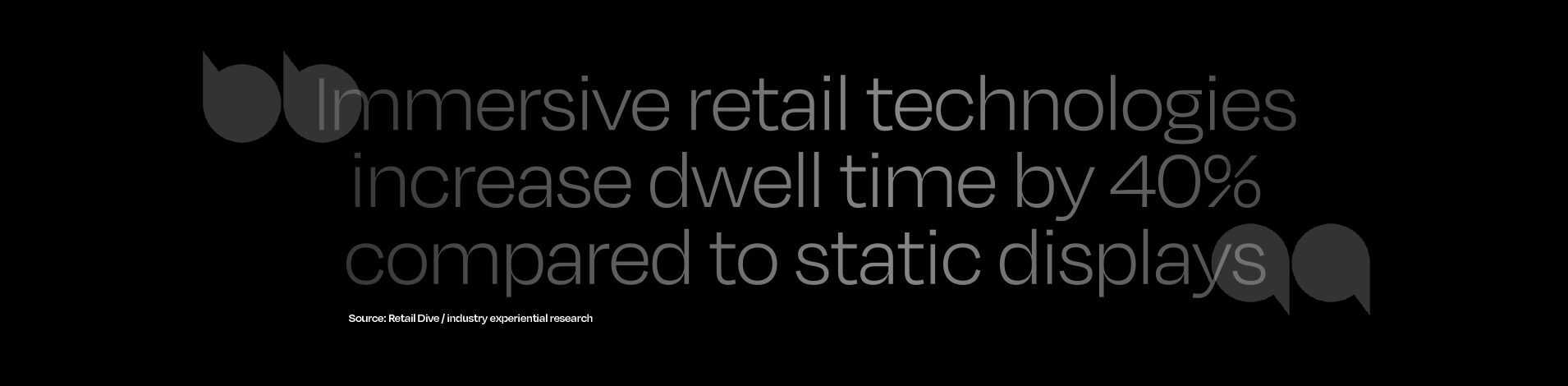
Businesses are increasingly adopting immersive technologies to create memorable experiences that capture attention.
Research suggests the global holographic display market will grow rapidly over the coming decade as industries adopt immersive display technologies for marketing, entertainment and communication.
Industries adopting hologram technology include:
The ability to present information in three dimensions makes holographic displays particularly effective for storytelling and complex visual communication.
You can explore typical pricing in our guide to hologram rental cost UK.
There are several different types of holographic display technologies used in modern installations.
Each technology creates holographic effects in different ways.
True holography uses laser interference patterns to record and reconstruct three-dimensional images.
In this process, laser light reflects from an object and combines with a reference beam to create an interference pattern recorded on a photographic surface.
When illuminated correctly, this pattern recreates the appearance of the original object in three dimensions.
True holography is widely used in scientific and security applications.
Examples include:
However, true holography is rarely used for large-scale public installations because the equipment required is complex and expensive.
One of the most common holographic display techniques used in exhibitions and events is based on a projection illusion known as Pepper’s Ghost.
This technique uses angled reflective surfaces to create the illusion of a floating image within a display environment.
The illusion is created by projecting an image onto a reflective surface positioned at an angle.
When viewed from the correct perspective, the image appears to float in space.
It is commonly used for:
Because it can create life-size digital characters, this technology is often used in installations that feature digital human holograms.
Volumetric displays generate images that occupy a real three-dimensional space rather than appearing on a flat surface.
These systems often use rapidly moving display surfaces or multiple light sources to create the appearance of a three-dimensional object visible from multiple angles.
Volumetric displays are often used for:
Because they allow viewers to observe objects from different angles, volumetric displays are particularly useful for analysing complex data.
Another technology often marketed as holographic displays uses rotating LED blades to create floating images.
These systems rapidly spin LED strips to produce visual persistence effects that appear as three-dimensional graphics.
Holographic fan displays are commonly used for:
While visually striking, these systems typically display prerecorded animations rather than interactive content.
Light-field displays attempt to recreate the way light reflects from real objects, allowing viewers to perceive depth without special glasses.
These systems produce images that change perspective as the viewer moves.
Light-field technology is still developing but has potential applications in fields such as:
The most advanced form of holographic communication combines holographic displays with artificial intelligence.
These systems create interactive AI holograms capable of communicating with audiences in real time.
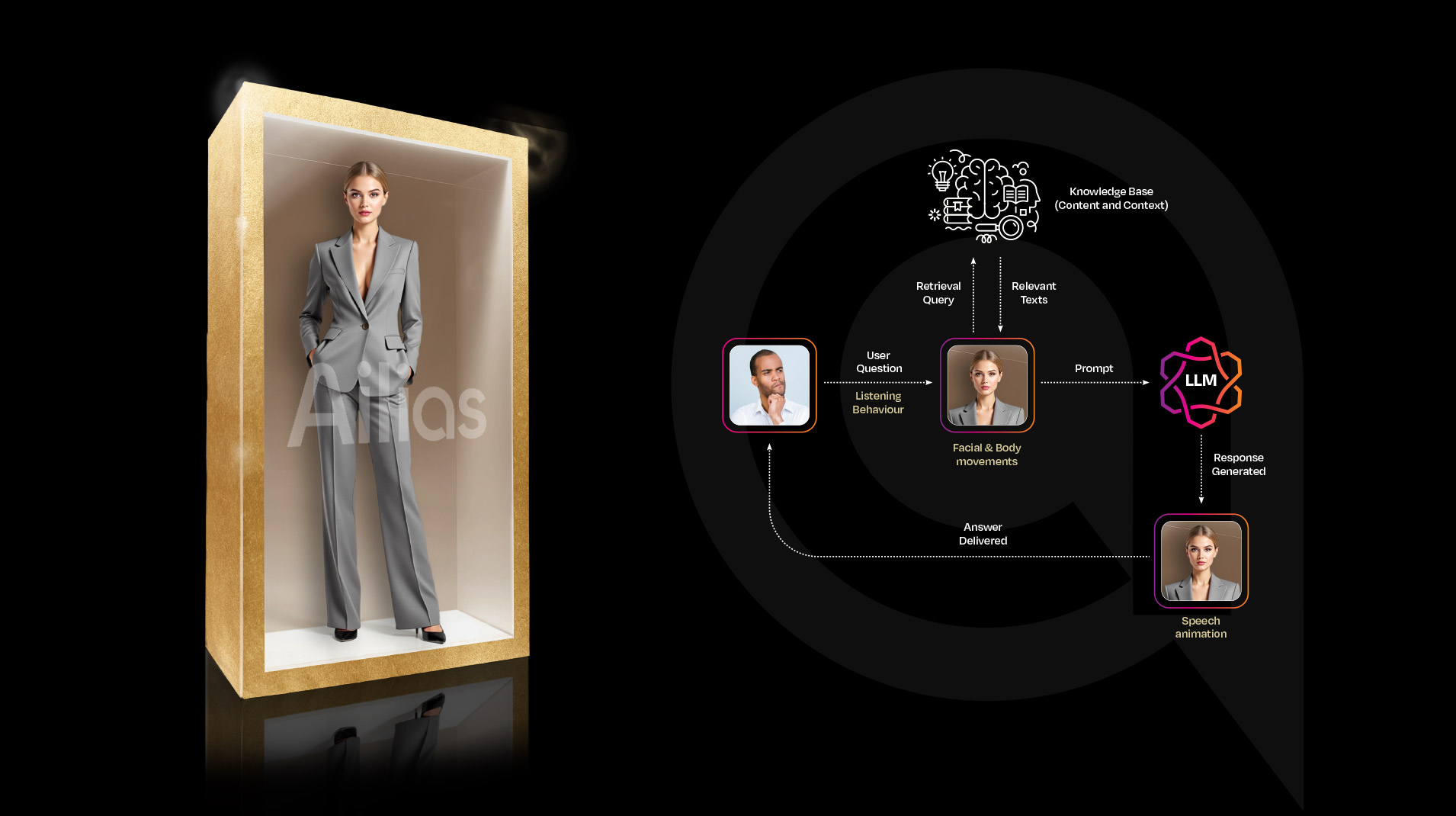
An interactive AI hologram system typically combines:
This combination allows audiences to speak directly with a holographic digital human that can answer questions and deliver presentations.
Research on conversational AI shows that combining natural language processing with speech recognition allows computers to interact with humans through natural conversation.
By integrating these capabilities with holographic displays, organisations can create interactive communication systems rather than passive visual displays.
Understanding how an AI hologram system works requires examining the process that powers these interactive installations.
Understanding the difference between display holograms and interactive AI holograms is important when selecting a hologram technology.
These systems typically:
They are primarily used for visual marketing displays.
Conversational hologram systems allow audiences to:
Because responses are generated dynamically by artificial intelligence, each interaction can be unique. This makes interactive holograms particularly powerful in environments where communication and engagement are important.
The best hologram technology for an organisation depends on the intended use case.
Retail advertising and promotional installations may benefit from display technologies designed primarily for visual impact.
Museums, exhibitions and educational environments often benefit from interactive hologram systems that allow audiences to ask questions and explore information. These systems transform holograms from passive visual displays into interactive storytelling platforms.
At Ailias, the technology powers the interaction — but the character creates the experience.
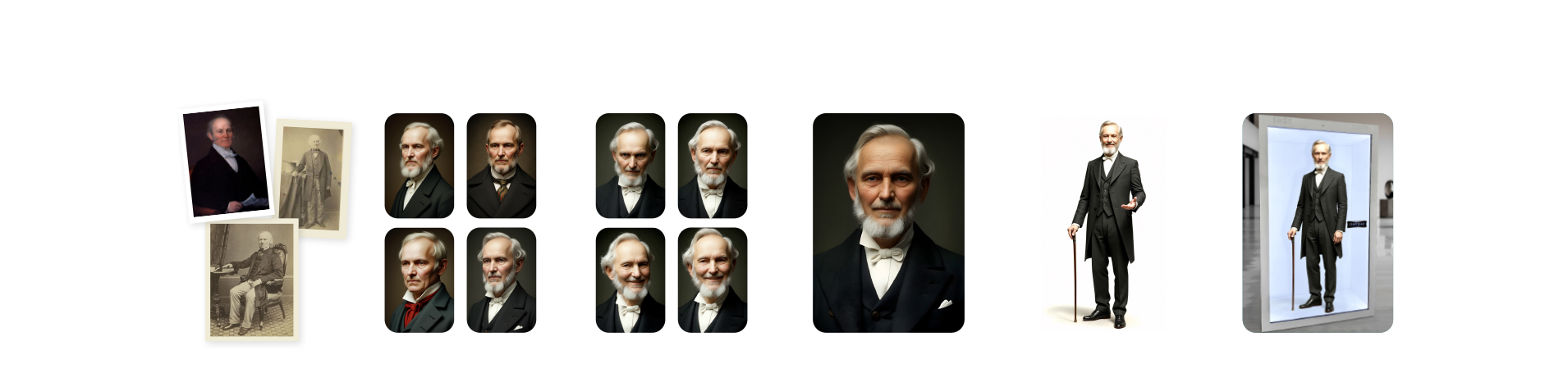
We pride ourselves on delivering the very best quality so we design every hologram with a focus on realism, personality and performance, combining digital human design, voice development and behavioural modelling to create authentic, engaging interactions.
Because ultimately, the success of a conversational AI hologram depends on one thing:
how human it feels.
As digital identity technology evolves, increasingly human-like avatars and photo-realistic digital replicas are becoming central to how audiences experience digital interaction. Research from the World Economic Forum highlights how embodied digital entities that replicate human behaviour are enabling more immersive, intuitive and emotionally engaging experiences.
Organisations considering holographic technology should begin by identifying the goals of the installation.
Answering these questions helps determine the type of system required and the level of customisation needed.
Working with experienced hologram developers ensures the installation is designed to deliver the intended audience experience.
Ailias develops interactive conversational AI holograms designed for museums, exhibitions, retail environments and corporate installations.
Our hologram systems combine conversational artificial intelligence with immersive holographic displays to create digital humans capable of interacting with audiences in real time.
These installations allow organisations to deliver information through engaging interactive experiences rather than passive displays.
By combining artificial intelligence with holographic technology, Ailias enables organisations to create powerful storytelling environments that capture attention and communicate ideas effectively.
You can learn about the costs of Conversational AI Holograms here
A conversational AI hologram is a life-sized digital human powered by artificial intelligence and displayed through holographic projection technology. The AI allows the holographic character to communicate naturally with people, while the holographic display creates the illusion of a real person standing in front of the audience.
We offer a variety of fully conversational AI human hologram solutions as permanent installations or for rental. We can create any brand ambassador or corporate legend, and deliver and install for any application. Start a conversation with Ailias and let us bring your legend to life.
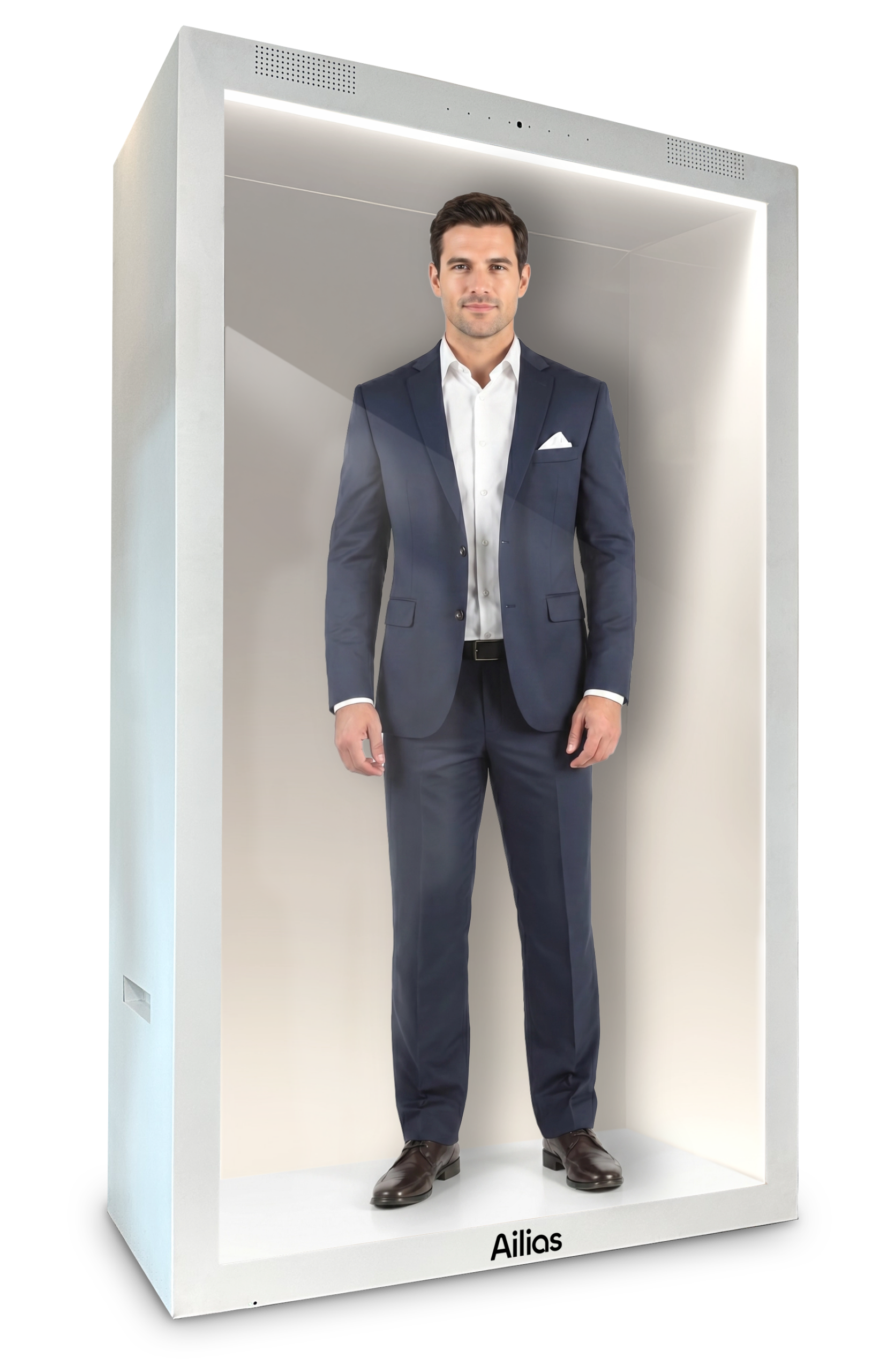
Hologram technology refers to methods of creating images that appear three-dimensional and visible in space without requiring special glasses.
Common types include Pepper’s Ghost projection, volumetric displays, holographic fan displays and interactive AI hologram systems.
They combine conversational artificial intelligence, speech recognition, digital human rendering and holographic display technology to enable real-time interaction with audiences.
Unlike services that offer pre-recorded avatars or live-streamed video feeds, Ailias delivers real-time conversational holograms with AI-driven speech and 3D life-size projection, ideal for museums, events, and brand activations.
Interactive AI holograms typically require additional technology such as conversational AI and real-time processing, which can increase cost. However, they also deliver significantly higher engagement and long-term value compared to passive displays.
An AI hologram installation typically includes holographic display hardware, conversational AI software, digital human development, content creation and system integration tailored to the environment.
AI hologram installations can deliver value through increased audience engagement, longer interaction times and improved communication of information. In many cases, they also generate additional visibility through social sharing and visitor interest.
Come and meet us at the Museums & Heritage Show, Olympia, May 13-14