Product Demonstration
AI avatars can:
explain features
compare products
guide decision-making

Retail is undergoing a fundamental shift. As online competition continues to grow, physical stores must offer more than just products—they must deliver engaging, memorable experiences.
AI avatars are emerging as one of the most effective ways to achieve this.
By combining conversational AI with digital human technology, retailers can create interactive experiences that:
This transforms the role of retail spaces from transactional environments into interactive engagement platforms.
AI avatars are not required in every retail environment. They are most effective where customer engagement, product explanation, or brand experience is a priority.
Retailers should consider AI avatars when:
In lower-engagement retail environments, simpler solutions may be more appropriate.
The key is aligning the technology with a clear commercial objective.
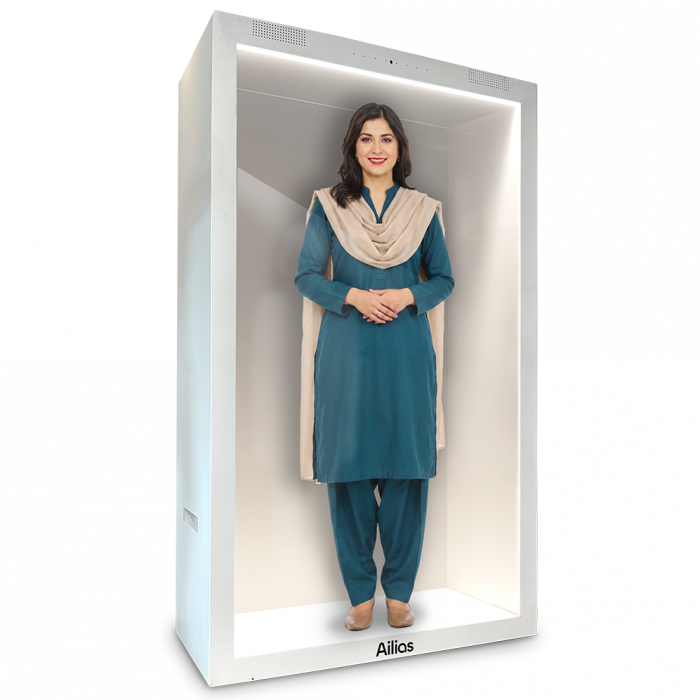
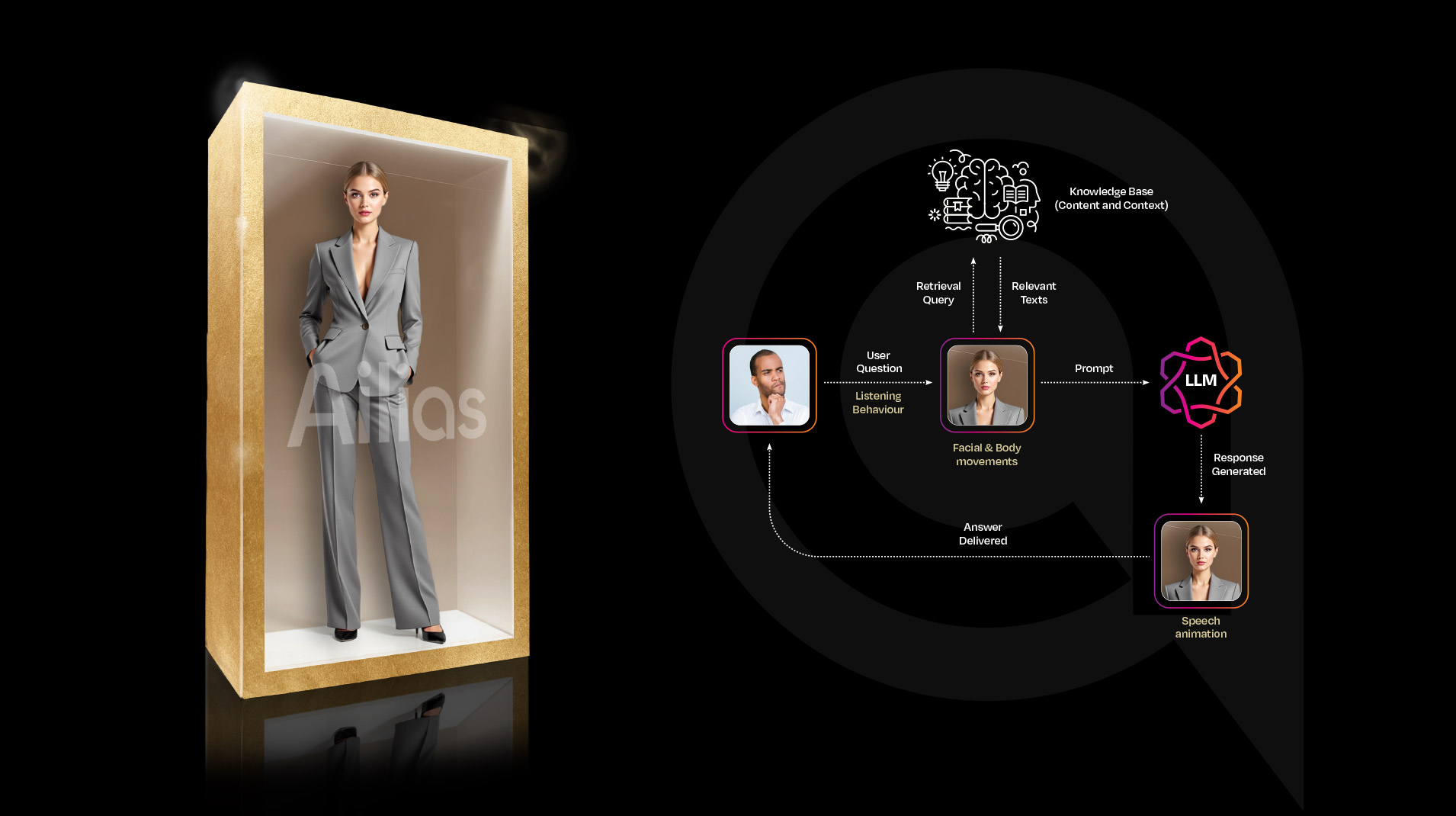
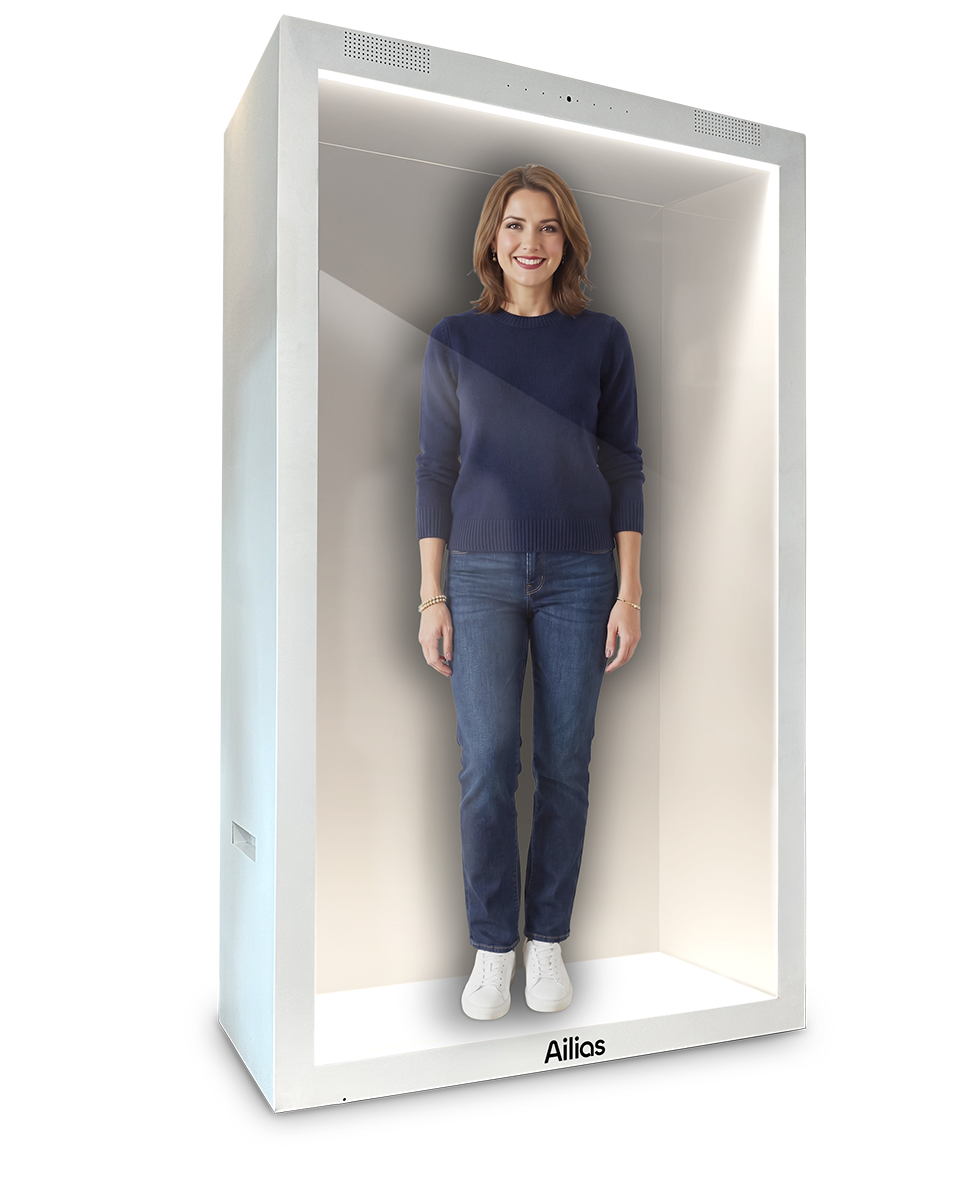
AI avatars in retail are digital humans powered by conversational AI, designed to interact with customers in real time within physical environments.
These systems allow customers to:
For a broader overview, see how AI avatars for business are used across industries, allowing them to move beyond passive content and into interactive communication by adding AI Hologram Technology to their offering.
As customer expectations evolve, retailers are moving away from passive communication toward more interactive, responsive experiences that better capture attention and drive engagement.
Retailers are facing increasing pressure to:
Not all use cases deliver the same level of value. The most effective deployments are those aligned with clear customer interaction goals. AI avatars can then be successfully applied across a wide range of retail scenarios.
Providing:
instant answers
guided interaction
support without requiring staff availability
AI avatars can act as:
brand ambassadors
campaign representatives
interactive storytellers
Used in:
product launches
experiential campaigns
in-store promotions

These tools are effective for visibility but limited in engagement.
This creates a more engaging experience that:
Not all AI avatar implementations are successful. Common challenges include:
In these cases, the technology can become a novelty rather than a valuable tool.
Successful deployments focus on usability, clarity, and commercial relevance.
To work effectively in retail environments, AI avatars must be designed for real-world conditions.
Key factors include:
Customers must be able to engage naturally without instruction.
The avatar should have a defined role, such as assisting customers or explaining products
Retail spaces are often noisy, requiring careful setup.
A high-quality digital human increases engagement and trust.
Ailias combines advanced AI capabilities with practical, experience-led design. Our systems are designed specifically for real-world retail environments.
Real-time interaction with customers.
Support for diverse customer bases across UK retail.
Help structure interaction and guide users through experiences.
AI avatars are particularly effective in high-traffic environments where:
This is why they are increasingly used in retail hologram experiences in shopping centres.
AI avatars should be viewed as a commercial tool, not just an experience or visual feature.
When deployed correctly, AI avatars can support measurable outcomes, including improved engagement, better product understanding, and increased conversion potential.
When considering AI avatars for retail, the key is not just the technology itself, but how well it fits your environment and objectives.
The most effective solutions are those designed around real-world retail conditions, not just technical capability.
Ailias delivers AI avatar solutions designed specifically for real-world retail environments, where engagement and usability are critical.
Retail is moving toward experience-led environments, where engagement is as important as product availability. AI avatars play a key role in this shift, enabling retailers to communicate more effectively and create memorable customer interactions.
For brands looking to enhance in-store experience, they represent a powerful and practical solution.
If you’re exploring how AI avatars can enhance your retail environment, the next step is to define the right use case and deployment approach.
Retailers that approach AI avatars as part of a wider engagement strategy—rather than a standalone feature—are far more likely to see meaningful results.
They are used for customer engagement, product explanation, brand interaction, and improving in-store experience.
They can support sales by improving customer understanding and engagement.
Yes, particularly in high-footfall environments where engagement is critical.
No, they are designed to support staff by handling engagement and communication at scale.
Yes, when properly designed with appropriate audio setup and features such as captions.
Come and meet us at the Museums & Heritage Show, Olympia, May 13-14