

AI Holograms for Retail: Use Cases, Benefits and ROI Explained
AI Holograms for Retail: Use Cases, Benefits and ROI Explained
Retail is no longer just about product availability—it is about experience, engagement, and differentiation. As consumers become more accustomed to personalised, digital-first interactions, physical retail environments are under pressure to evolve.
AI holograms are emerging as one of the most effective ways to bridge this gap. By combining visual impact with real-time interaction, they allow retailers to turn passive environments into active, engaging spaces that attract attention and support conversion.
What Are AI Holograms in Retail?
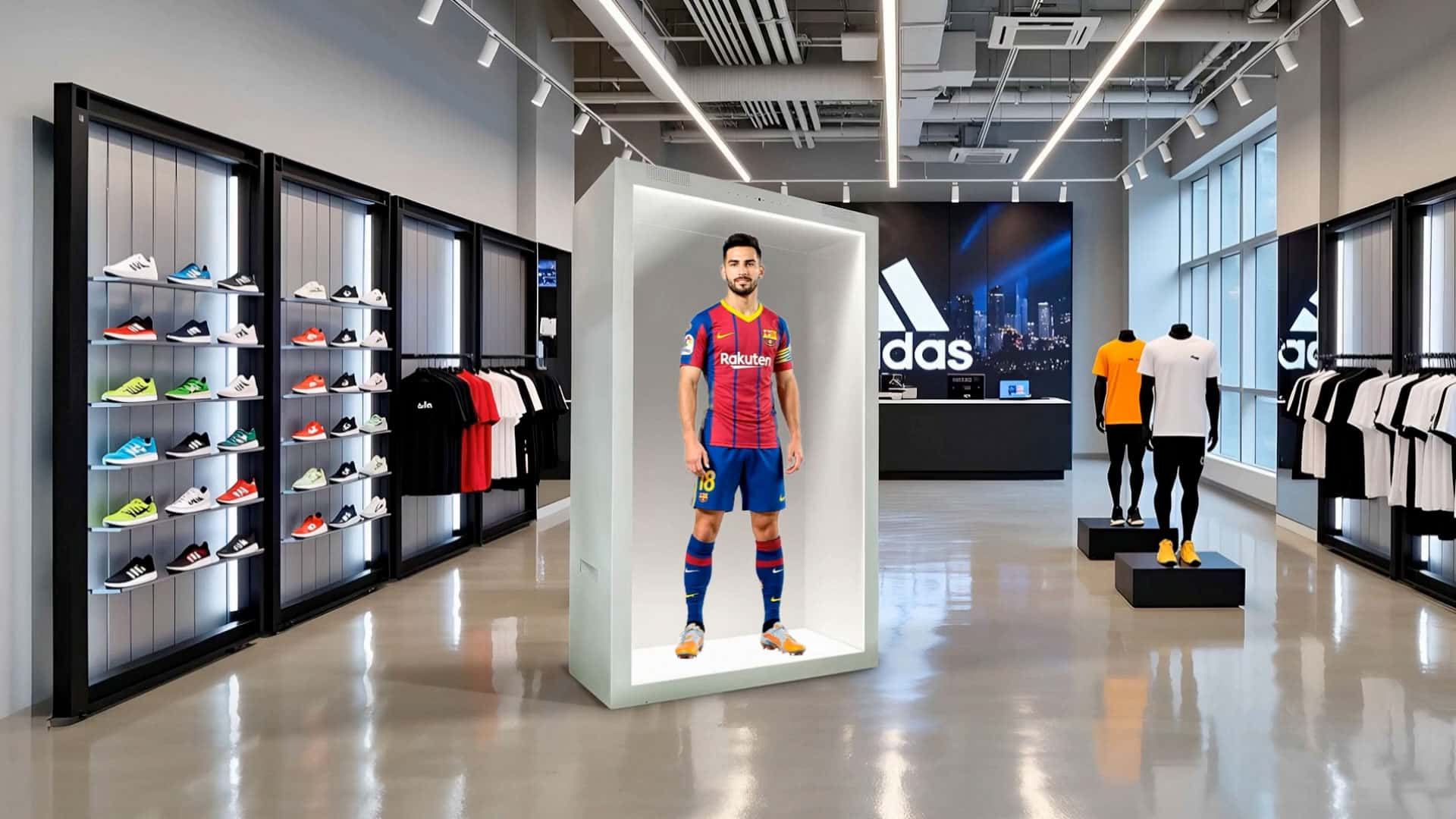
AI holograms are interactive digital human experiences presented through holographic or display-based systems. They combine:
- Conversational AI
- Photoreal digital human design
- Real-time voice interaction
- Large-format display or hologram technology
The result is a visible, interactive presence that can communicate with customers naturally.
Advances from organisations like NVIDIA are accelerating the realism and responsiveness of these systems, making them increasingly viable for commercial retail environments.
For a deeper technical understanding, see our hologram technology guide.
Why Retailers Are Investing in AI Holograms
Retailers are adopting AI holograms for one core reason: they deliver engagement that traditional displays cannot.
1. They Capture Attention Instantly
In high-footfall environments, attention is the most valuable currency. AI holograms create a strong visual presence that stands out from standard screens, posters, or signage.
This makes them particularly effective in:
- Shopping centres
- Flagship stores
- Pop-up activations
2. They Turn Attention Into Interaction
Unlike static displays, AI holograms allow customers to:
- Ask questions
- Explore products
- Engage in real-time conversation
This transforms the experience from passive viewing to active participation—one of the key drivers of customer engagement.
3. They Improve Product Understanding
Retailers often struggle to communicate complex or high-value products effectively.
AI holograms can:
- Explain features clearly
- Adapt responses based on questions
- Deliver consistent, accurate information
This is particularly useful in sectors such as technology, automotive, telecoms, and luxury retail.
4. They Support Measurable Outcomes
Unlike traditional visual merchandising, AI holograms can be integrated into the sales journey.
They can:
- Guide customers to specific products
- Capture interest or intent
- Support lead generation
This makes them a functional commercial tool, not just a marketing feature.
Key Retail Use Cases for AI Holograms
The most effective deployments are aligned with clear business objectives.
Flagship Store Experiences
In flagship environments, brands are expected to deliver standout experiences. AI holograms can act as:
- Brand ambassadors
- Experience hosts
- Product guides
They help create a premium, memorable in-store atmosphere.
Product Launches and Promotions
For new product releases, AI holograms provide a scalable way to:
- Introduce key features
- Deliver campaign messaging
- Engage customers consistently
They ensure that every visitor receives the same high-quality introduction.
High-Footfall Retail Activations
Shopping centres and pop-up spaces require technologies that can attract attention quickly and sustain engagement.
AI holograms are particularly effective at:
- Stopping foot traffic
- Starting conversations
- Driving interaction
Explore more on our interactive holograms for retail and brands page.
Showrooms and Experience Centres
For complex products, AI holograms can act as the first layer of explanation before a customer engages with a sales advisor.
This improves efficiency and ensures customers are better informed.
Retail Customer Service Support
AI holograms can handle:
- Frequently asked questions
- Basic product queries
- Directional assistance
This allows staff to focus on higher-value interactions.
The Commercial Benefits of AI Holograms
When deployed correctly, AI holograms deliver clear commercial advantages.
Increased Dwell Time
Customers spend more time engaging with interactive experiences than static displays.
Higher Engagement Rates
Real-time interaction creates stronger emotional and cognitive engagement.
Improved Brand Recall
Memorable experiences are more likely to be remembered and shared.
Scalable Messaging
AI holograms deliver consistent messaging across locations and campaigns.
Differentiation
Most retail environments still rely on standard digital displays. AI holograms provide a clear point of difference.
Understanding ROI: How AI Holograms Deliver Value
One of the most important considerations for retailers is return on investment.
AI holograms deliver ROI through multiple channels:
1. Reusability
A single experience can be deployed across:
- Multiple stores
- Events
- Campaigns
2. Increased Conversion Potential
Better product understanding and engagement can lead to higher conversion rates.
3. Reduced Content Production Costs Over Time
Once developed, digital human experiences can be updated and reused more efficiently than traditional campaign assets.
4. Data and Insights
AI-driven systems can capture:
- Customer questions
- Interaction trends
- Engagement metrics
According to Gartner, data-driven customer engagement is becoming a critical factor in retail performance.
AI Holograms vs Traditional Retail Technology
Retailers already use:
- LED displays
- Touchscreens
- Video content
These tools are effective for visibility, but limited in interaction.
AI holograms combine:
- Visual impact
- Interaction
- Intelligence
This creates a more complete engagement solution compared to traditional retail technology.
Challenges and Considerations
To be effective, AI hologram deployments must be:
- Well-designed visually
- Aligned with brand identity
- Built around clear user journeys
- Technically reliable in real-world environments
Poor execution can reduce impact, so quality and strategy are critical.
The Future of AI Holograms in Retail
Retail is moving toward more immersive, experience-led environments.
McKinsey & Company highlights that customer experience is becoming a primary driver of brand differentiation.
AI holograms sit at the intersection of:
- Experience
- Technology
- Engagement
As adoption increases, they are likely to become a standard feature in premium retail environments.
Where Ailias Fits
Ailias focuses on delivering interactive AI hologram experiences designed for real-world commercial use.
This includes:
- Conversational AI integration
- Photoreal digital human creation
- Large-format display systems
- Scalable deployment across environments
Explore our AI conversational holograms solution to see how these technologies come together.
Conclusion
AI holograms represent a shift in how retailers approach customer engagement. They move beyond static display and into interactive, intelligent experience.
For brands looking to stand out, communicate more effectively, and create memorable retail environments, AI holograms offer a practical and scalable solution.