


Interactive Retail Technology: What Actually Drives Customer Engagement?
Interactive Retail Technology: What Actually Drives Customer Engagement?
Retailers are investing heavily in new technology—but not all of it delivers real results.
From digital screens and mobile integrations to immersive installations, the modern store is full of “interactive” features. The problem is that much of this technology remains passive in practice. It may look impressive, but it does not meaningfully engage customers or influence behaviour.
The key question for retailers is no longer what technology is available, but what actually drives customer engagement in a physical space.
The Shift from Display to Experience
Traditional retail environments were built around display:
- Products on shelves
- Posters and signage
- Video content on screens
Today, that model is no longer enough. Customers expect:
- Interaction
- Personalisation
- Experiences worth their time
According to McKinsey & Company, customer experience is now a primary driver of brand loyalty and revenue growth.
This shift has pushed retailers toward interactive retail technology—but not all solutions deliver equally.
What Counts as Interactive Retail Technology?
Interactive retail technology includes any system that allows customers to actively engage, rather than passively observe.
Common examples include:
- Touchscreens and kiosks
- Mobile integrations (QR, apps)
- Augmented reality (AR)
- Smart mirrors
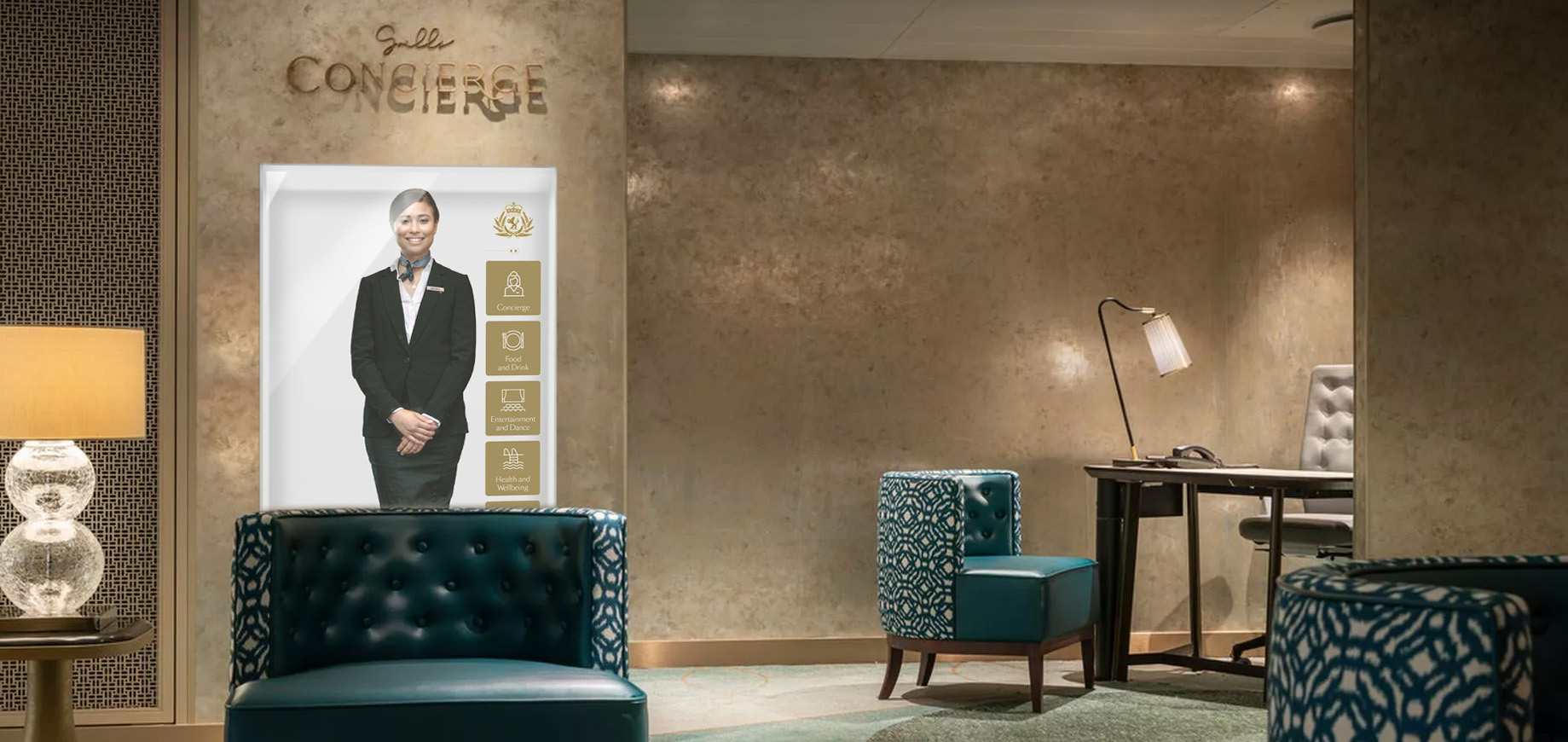
- Digital humans and AI avatars
- Interactive holograms
However, simply being “interactive” does not guarantee effectiveness.
Why Most Retail Technology Falls Short
Many retail technologies fail to deliver meaningful engagement because they rely on effort from the customer.
For example:
- Touchscreens require users to initiate interaction
- QR codes require scanning and device switching
- Apps require downloads
In high-footfall environments, most customers will not take these steps.
This creates a gap between available technology and actual engagement.
The Three Drivers of Real Customer Engagement
Based on how customers behave in physical spaces, the most effective retail technologies share three characteristics:
1. Visibility
If a technology does not attract attention, it will not be used.
It must:
- Stand out visually
- Be noticeable from a distance
- Compete with surrounding noise
2. Low Friction Interaction
The easier it is to engage, the more likely customers will interact.
The best technologies:
- Require minimal effort
- Start interaction naturally
- Do not rely on instructions
3. Perceived Value
Customers engage when they believe they will gain something:
- Useful information
- Entertainment
- Personalised experience
Without this, even the most advanced technology becomes background noise.
Where AI Digital Humans and Holograms Excel
This is where AI-driven experiences stand apart.
Interactive AI holograms and digital humans combine:
- High visibility
- Natural interaction
- Immediate value
Customers do not need to learn how to use them. They simply:
- Look
- Listen
- Speak
This creates a far more intuitive experience compared to traditional retail tech.
Explore how this works in our AI holograms for retail guide.
Comparing Key Retail Technologies
LED Displays and Video Walls
- Strong visibility
- Low interaction
- Good for awareness, not engagement
Touchscreens and Kiosks
- Moderate interaction
- High friction (requires initiation)
- Often underused in busy environments
Mobile-Based Experiences
- Personalised
- Dependent on user behaviour
- Limited visibility in-store
- High visibility
- Low friction
- Real-time interaction
- Strong engagement potential
This combination makes them one of the most effective retail engagement technologies currently available.
Real Retail Use Cases
The most successful implementations are tied to clear objectives.
Product Education
Helping customers understand products quickly and clearly.
Brand Storytelling
Creating memorable experiences that communicate brand values.
Customer Guidance
Directing customers through store layouts or product categories.
Promotional Campaigns
Supporting launches, offers, and limited-time activations.
The Role of Data in Engagement
Modern retail technology is increasingly data-driven.
AI-powered systems can capture:
- Questions customers ask
- Topics of interest
- Interaction duration
According to Gartner, data-driven engagement is becoming essential for understanding and improving customer experience.
This turns interactive technology into a feedback loop, not just a display tool.
The Future of Interactive Retail Technology
Retail is moving toward:
- Immersive environments
- AI-driven interaction
- Experience-led spaces
The National Retail Federation consistently highlights innovation and customer experience as key priorities for modern retail.
Technologies that combine:
- Presence
- Intelligence
- Interaction
…will define the next generation of physical stores.
Choosing the Right Technology
Retailers should evaluate technology based on outcomes, not features.
Ask:
- Does it attract attention?
- Does it encourage interaction?
- Does it deliver value to the customer?
- Does it support commercial goals?
If the answer is no, the technology is unlikely to perform—regardless of how advanced it appears.
Where Ailias Fits
Ailias focuses on delivering interactive AI hologram experiences that meet all three engagement criteria:
- Visible
- Easy to interact with
- Valuable to the user
By combining conversational AI with digital human design and large-format display, Ailias helps retailers create experiences that go beyond display and into genuine interaction.
Explore our interactive holograms for retail and brands to see how this translates into real-world environments.
Conclusion
Interactive retail technology is not about adding more screens or features. It is about creating experiences that customers actually engage with.
The most effective solutions are those that:
- Capture attention
- Remove friction
- Deliver value
AI digital humans and holograms represent one of the strongest combinations of these factors—making them a key part of the future retail landscape.