


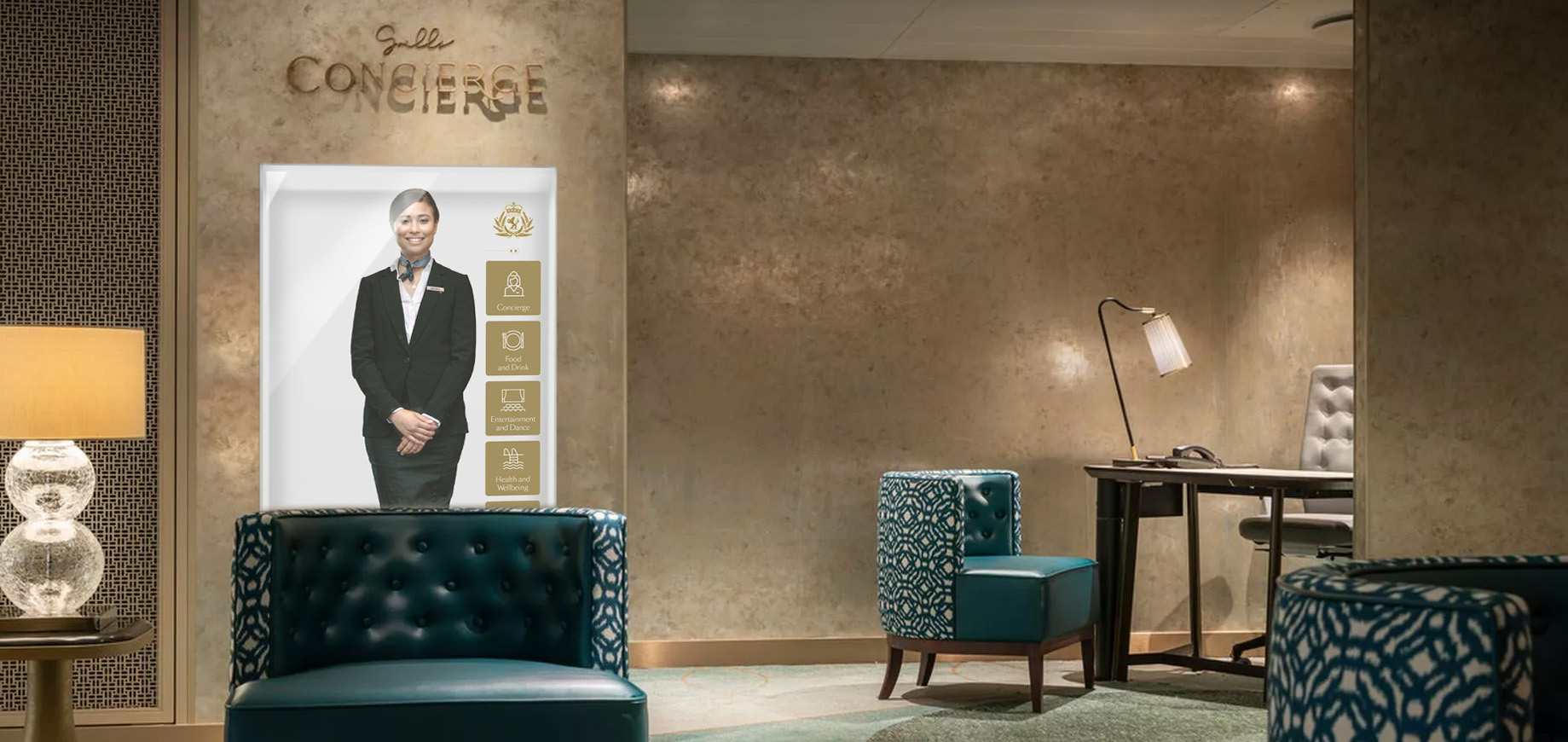
Interactive Hotel Experiences | The Future of Immersive Hospitality
Interactive Hotel Experiences and the Future of Immersive Hospitality
Hospitality is becoming increasingly experience-driven.
Guests no longer simply expect accommodation, service and convenience. Increasingly, they expect environments that feel:
- immersive,
- memorable,
- emotionally engaging,
- and distinctive from the moment they arrive.
As a result, hospitality brands are investing more heavily in experience design, immersive interaction and technology capable of creating stronger emotional engagement throughout the guest journey.
This shift is helping redefine what modern hospitality environments look and feel like.
Why Hospitality Is Moving Beyond Traditional Guest Interaction
Traditional hospitality environments have historically focused on:
- reception,
- concierge support,
- printed communication,
- and static guest information systems.
While these approaches still play an important role, guest expectations are evolving rapidly.
Modern visitors increasingly expect:
- interaction,
- personalisation,
- visual engagement,
- and intuitive communication integrated naturally within the environment itself.
This is one reason immersive conversational experiences are becoming increasingly relevant within modern hospitality spaces.
Hospitality is steadily moving away from passive communication and toward more interactive, experience-led environments.
The Rise of Experience-Led Hospitality
Luxury hospitality increasingly competes through:
- atmosphere,
- storytelling,
- emotional engagement,
- and memorability.
Many hospitality brands are now exploring how immersive technology can help create:
- stronger first impressions,
- more engaging guest journeys,
- and environments people actively talk about and share online.
Importantly, the most effective hospitality experiences do not feel technology-driven. They feel naturally integrated into the wider guest environment.
This distinction matters enormously within premium hospitality where subtlety, design quality and emotional perception strongly influence the overall guest experience.
Interactive Experiences Create Stronger Emotional Engagement
Guests are significantly more likely to remember experiences that feel:
- participatory,
- immersive,
- and emotionally engaging.
This is particularly important within luxury hospitality environments where guest perception directly influences:
- brand reputation,
- customer loyalty,
- and word-of-mouth marketing.
Interactive hospitality experiences can help create:
- moments of surprise,
- immersive storytelling opportunities,
- memorable arrival experiences,
- and stronger emotional connection throughout the venue itself.
Hospitality brands are increasingly exploring immersive guest engagement as part of wider experiential communication strategies.
Why Visual Realism Matters in Hospitality
Within hospitality environments, presentation quality matters enormously.
Poorly designed digital interaction can quickly feel:
- artificial,
- distracting,
- or disconnected from the surrounding environment.
By contrast, visually realistic immersive experiences help create interaction that feels:
- more believable,
- more welcoming,
- and more emotionally natural for guests.
This is one reason realistic immersive presentation is becoming increasingly important within premium hospitality environments.
Visual realism does not simply improve aesthetics. It fundamentally influences how guests perceive the quality of the experience itself.
Hospitality Experiences Are Becoming More Conversational
Modern guests increasingly expect interaction that feels natural and responsive rather than static or transactional.
Conversational interaction allows hospitality experiences to feel:
- more intuitive,
- more personalised,
- and more emotionally engaging.
Instead of passively viewing information, guests can interact naturally with immersive digital experiences capable of responding dynamically in real time.
Human-like conversational interaction is becoming increasingly important within hospitality environments focused on premium guest communication and accessibility.
This creates experiences that feel significantly more engaging than traditional digital signage or information systems alone.
International Hospitality Requires More Flexible Communication
Modern hospitality environments increasingly welcome guests from:
- different countries,
- different cultures,
- and different language backgrounds.
This creates growing demand for communication systems capable of supporting:
- multilingual interaction,
- intuitive guest communication,
- and more accessible hospitality experiences.
Interactive hospitality environments that support conversational multilingual communication can help create smoother and more engaging guest interaction across international venues.
Hospitality is becoming one of several industries exploring immersive AI engagement systems designed around real-world communication environments.
Technology Should Enhance Hospitality — Not Overpower It
One of the biggest mistakes within hospitality technology is allowing the technology itself to become the focus of the experience.
The most effective hospitality experiences still feel:
- human,
- emotionally warm,
- and experience-led.
Technology works best when it supports:
- atmosphere,
- storytelling,
- communication,
- and emotional engagement naturally within the venue itself.
This is particularly important within luxury hospitality where subtlety and guest comfort remain central to the experience.
How Ailias Approaches Interactive Hospitality Experiences
Ailias develops immersive hospitality experiences designed around:
- emotional engagement,
- conversational interaction,
- and premium visual presentation.
By combining:
- conversational AI,
- immersive digital interaction,
- realistic presentation,
- and experience-led design,
Ailias helps hospitality venues create experiences that feel:
- engaging,
- memorable,
- and naturally integrated within live guest environments.
Experiences can incorporate:
- multilingual communication,
- gesture-enabled interaction,
- conversational workflows,
- supporting visual content,
- and immersive storytelling tailored around the venue and audience itself.
The focus is not simply on displaying technology, but on creating hospitality experiences guests genuinely remember afterwards.
The Future of Hospitality Is Immersive
Hospitality is steadily moving toward more:
- immersive,
- interactive,
- and emotionally engaging guest experiences.
As competition within luxury hospitality continues increasing, brands are looking for new ways to create:
- differentiation,
- memorability,
- and deeper emotional connection with guests.
Research from Gartner and Forrester Research continues to highlight growing investment in immersive customer engagement, conversational interaction and experience-led digital communication.
The hospitality environments that succeed in the future are likely to be those that combine technology and experience design in ways that feel intuitive, human and emotionally memorable.
Conclusion
Interactive hospitality experiences are becoming increasingly important within modern guest environments.
As guest expectations continue evolving, hospitality brands are exploring how immersive communication, conversational interaction and experience-led design can help create more memorable and emotionally engaging experiences.
The future of hospitality will not simply revolve around technology itself. It will revolve around how effectively technology enhances human experience.
Frequently Asked Questions
Interactive hotel experiences combine immersive communication, conversational interaction and experience-led design to create more engaging guest environments.
Modern guests increasingly expect hospitality environments that feel memorable, interactive and emotionally engaging rather than purely functional.
Conversational interaction allows guests to communicate naturally with immersive digital experiences, creating more intuitive and engaging guest communication.
Visually realistic interaction helps hospitality experiences feel more believable, welcoming and aligned with premium guest expectations.
Yes. Modern conversational AI systems can support multilingual guest interaction across a wide range of hospitality environments.