


What is a Holobox? A Complete Guide to Holobox Technology in 2026
What is a Holobox?
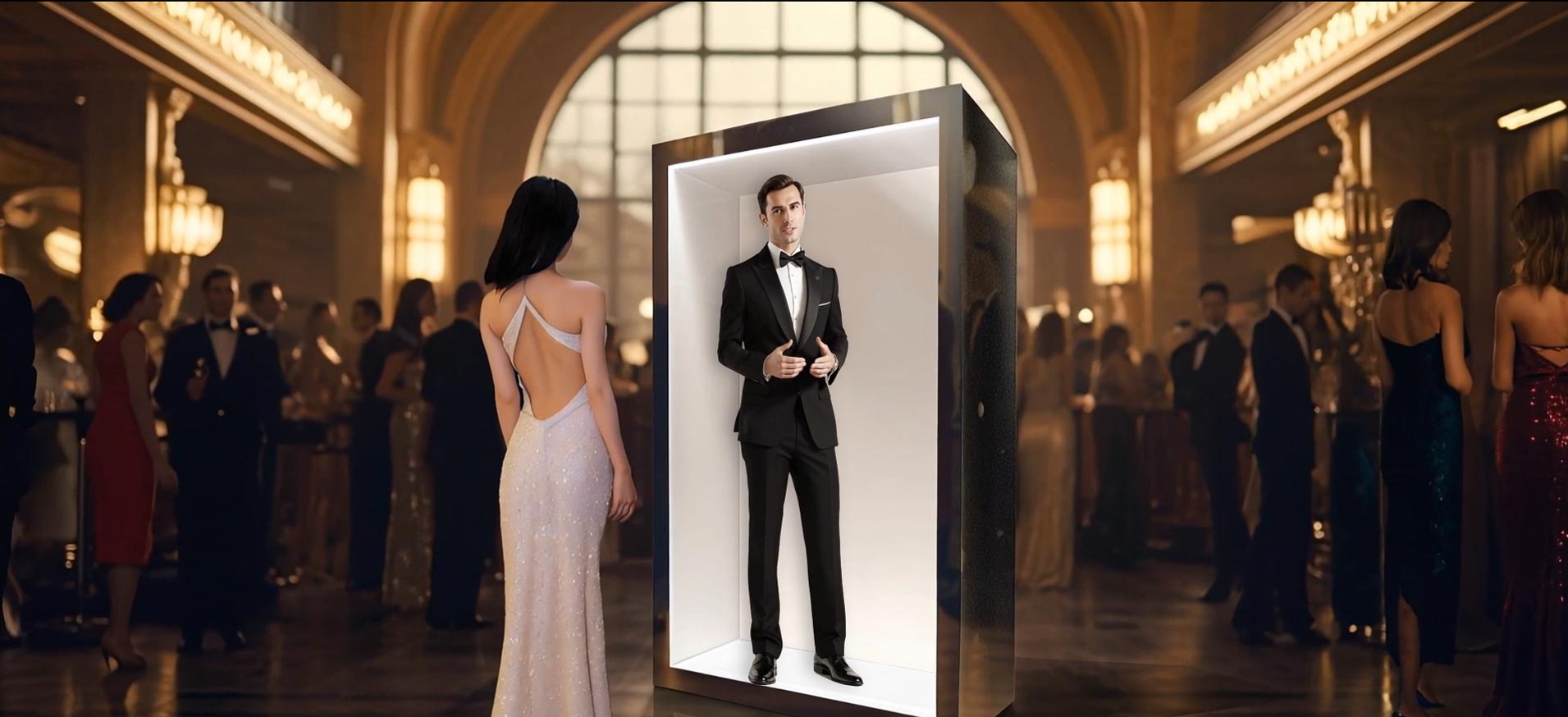
A Holobox is a digital display system designed to create the illusion of a life-sized person appearing inside a physical enclosure. Often referred to as a hologram box, holographic display box or digital human display, a Holobox combines high-resolution screens, specialist display technology and carefully controlled lighting to create an immersive visual experience.
While the term “Holobox” is often used as a brand name within the industry, it has increasingly become a generic term used to describe life-sized holographic display systems that present realistic people, presenters, performers and digital humans.
Today, Holobox technology is used across events, retail, museums, airports, visitor attractions, education, healthcare and corporate environments.
How Does a Holobox Work?
Despite being commonly described as a hologram, most Holobox systems do not create true holograms.
Instead, they use a combination of:
- High-resolution displays
- Transparent display technology
- Reflection-based optical techniques
- Carefully controlled lighting
- Video or real-time digital content
The result is a convincing illusion that a person is physically standing inside the display.
Modern systems can display:
- Recorded video presentations
- Remote live speakers
- AI-powered digital humans
- Historical figures
- Product demonstrations
- Virtual customer service representatives
The realism of the experience depends heavily on the quality of the display, content creation, lighting conditions and interaction design.
What Can a Holobox Be Used For?
One of the reasons Holobox technology has become so popular is its versatility.
Events and Exhibitions
Trade shows and exhibitions are among the most common applications.
A Holobox can attract attention, deliver presentations and engage visitors without requiring a presenter to be physically present throughout the event.
Popular uses include:
- Product launches
- Exhibition stands
- Corporate presentations
- Brand activations
- Visitor engagement
Retail Environments
Retailers are increasingly using Holobox displays to create memorable customer experiences.
Examples include:
- Virtual brand ambassadors
- Product demonstrations
- Luxury retail experiences
- Interactive customer engagement
Museums and Visitor Attractions
Museums have embraced Holobox technology as a way of bringing history to life.
Historical figures can appear to tell their own stories, answer visitor questions and provide educational experiences that feel far more personal than traditional information boards.
Common examples include:
- Scientists
- Inventors
- Political figures
- Artists
- Local historical personalities
Airports and Transport Hubs
Airports are exploring the use of digital humans and Holobox systems as virtual concierges capable of helping passengers find information quickly and efficiently.
Potential applications include:
- Wayfinding
- Customer service
- Multilingual support
- Visitor information
- Premium passenger experiences
What Types of Holobox Systems Are Available?
Not all Holobox systems are the same. Today’s market includes a wide range of display technologies designed to suit different environments, budgets and visitor experiences.
At Ailias, our own range includes both standardised and bespoke solutions.
HoloMini
The HoloMini is a compact digital human display designed for reception areas, retail environments, museums and visitor attractions where space is limited. Despite its smaller footprint, it can still deliver realistic AI-powered conversations, multilingual support and interactive experiences.
HoloMax
The HoloMax is a full-size life-scale Holobox solution designed to create maximum visual impact. It is particularly suited to exhibitions, airports, corporate environments, visitor attractions and public spaces where organisations want visitors to feel they are interacting with a real person.
Bespoke Digital Human Installations
For organisations seeking something more unique, bespoke installations can be developed using a variety of display technologies, including:
- Transparent OLED displays
- LCD mirror displays
- Architectural display installations
- Spatial display systems
- Projection-based experiences
- Custom-built digital human enclosures
These approaches allow digital humans to be integrated directly into exhibitions, reception spaces, visitor centres and immersive environments.
Emerging Spatial Display Technologies
New display technologies are also beginning to expand what is possible.
Examples include:
- Transparent OLED display systems
- Glass-free spatial displays
- Light-field display technology
- Holographic visualisation systems
While these technologies serve different purposes and audience sizes, they demonstrate the continued evolution of digital human and holographic display experiences.
Ultimately, the best solution depends on the desired visitor experience, viewing distance, level of interaction and installation environment.
Can a Holobox Be Interactive?
Yes.
Early Holobox systems primarily played pre-recorded video content.
Today’s technology can be far more sophisticated.
Modern interactive Holobox solutions can include:
- Speech recognition
- Artificial intelligence
- Natural language conversation
- Multilingual communication
- Gesture recognition
- Visual intelligence
- Dynamic content delivery
This allows visitors to have genuine conversations with digital humans rather than simply watching a video presentation.
The result is a much more engaging and memorable experience.
Holobox vs Digital Signage
Many organisations initially compare Holobox technology with traditional digital signage.
However, they serve very different purposes.
Digital signage delivers information.
A Holobox creates engagement.
While digital signage focuses on displaying content, a Holobox focuses on presenting a person, character or digital human in a way that feels natural and immersive.
The difference is often the difference between passive viewing and active interaction.
How Much Does a Holobox Cost?
The cost of a Holobox varies significantly depending on the size, technology and level of interactivity required.
Typical costs may include:
- Hardware
- Content creation
- Character development
- Software licensing
- AI services
- Installation
- Support and maintenance
Simple video-based systems are generally less expensive than fully interactive conversational digital humans.
Organisations should consider the total experience rather than focusing solely on hardware costs.
For a detailed breakdown, see our guide to AI hologram costs.
What is the Difference Between a Holobox and an AI Digital Human?
A Holobox is the display.
An AI digital human is the character presented within that display.
Think of the Holobox as the stage and the digital human as the performer.
Modern AI digital humans can:
- Answer questions
- Hold conversations
- Speak multiple languages
- Deliver personalised information
- Access knowledge bases
- Provide customer support
Combining an AI digital human with a Holobox creates a powerful visitor experience that blends physical presence with conversational intelligence.
What Should You Look For When Choosing a Holobox Solution?
Not all systems are equal.
Key considerations include:
Realism
How realistic does the digital human appear?
Audio Quality
Can visitors hear and be heard clearly?
Interactivity
Is the experience conversational or video-only?
Reliability
Can the system operate reliably in public environments?
Content Flexibility
Can content be updated easily?
Scalability
Can additional characters or locations be added in future?
Accessibility
Does the system support captions, multiple languages and inclusive experiences?
The Future of Holobox Technology
The future of Holobox technology is increasingly linked to artificial intelligence.
Rather than simply displaying pre-recorded content, modern systems are evolving into intelligent digital humans capable of:
- Natural conversation
- Personalised interaction
- Multilingual communication
- Real-time information delivery
- Visual understanding
- Adaptive experiences
As AI continues to develop, Holobox systems are expected to become more capable, more realistic and more useful across a wide range of industries.
Final Thoughts
Holobox technology has evolved far beyond simple video playback.
Today’s systems can create highly immersive experiences that combine realistic digital humans with conversational AI, creating new opportunities for visitor engagement, customer service, education and entertainment.
Whether used in museums, airports, retail environments, exhibitions or corporate spaces, Holobox displays offer organisations a powerful way to communicate with audiences in a memorable and engaging manner.
The most successful deployments combine high-quality display technology with compelling content, intelligent interaction and a clear understanding of the visitor experience.
If you are exploring Holobox technology for your organisation, understanding the differences between traditional video systems and modern AI-powered digital humans is an excellent place to start.