


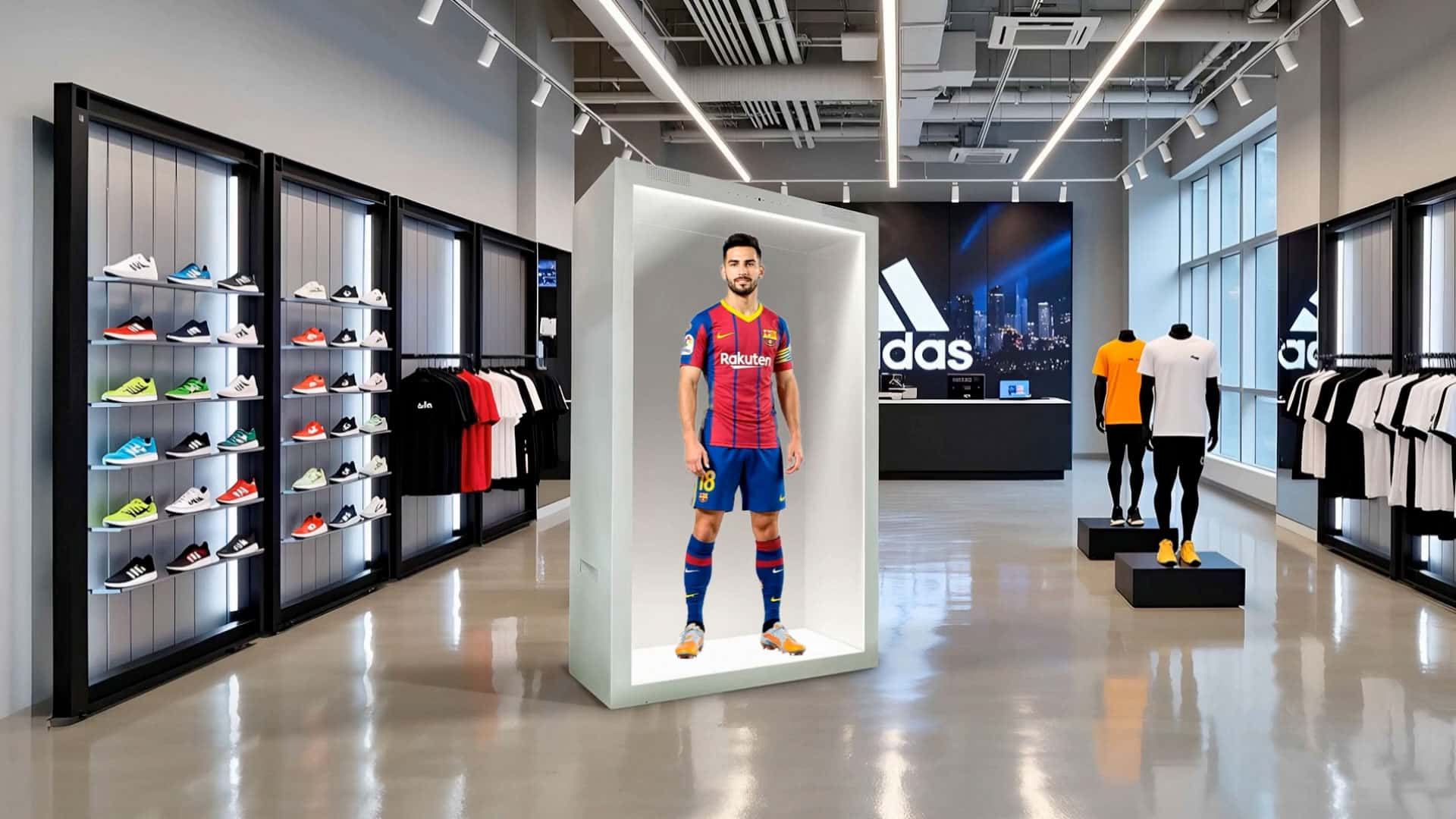
Why Retail Is Moving Toward Experience-Led Customer Engagement
Why Retail Is Moving Toward Experience-Led Customer Engagement
Retail is changing.
For decades, physical stores were designed primarily around inventory, transactions, and efficiency. Today, however, many retailers are rethinking the role of the store entirely.
As ecommerce has reshaped purchasing behaviour, physical retail spaces are increasingly expected to deliver something online environments cannot:
memorable, human-centred experiences.
This shift is driving the growth of what is often described as:
experience-led retail.
And increasingly, technology is becoming central to that transformation.
The Store Is No Longer Just a Sales Environment
One of the biggest misconceptions in retail is that stores compete directly with ecommerce on convenience alone.
In reality, physical retail retains several advantages that digital channels struggle to replicate:
- physical presence,
- emotional connection,
- immediacy,
- and human interaction.
Modern retailers are now investing more heavily in experiences that encourage customers to:
- spend longer in-store,
- engage more deeply,
- and connect more meaningfully with brands.
This represents a major strategic shift away from purely transactional retail thinking.
Why Customer Expectations Have Changed
Consumer expectations have evolved rapidly over the last decade.
Customers increasingly expect:
- personalisation,
- interactivity,
- responsiveness,
- and entertainment within retail environments.
This is particularly true among younger audiences who are accustomed to:
- digital interaction,
- on-demand communication,
- and immersive media experiences.
According to research from Deloitte and McKinsey & Company, customer experience is now one of the most important differentiators in retail performance.
As a result, retailers are investing more heavily in technologies that improve interaction and engagement—not just visibility.
Experience-Led Retail Is About More Than Technology
While immersive technology is becoming more visible in retail environments, successful experience-led retail is not simply about installing impressive hardware.
The most effective experiences are designed around:
- customer behaviour,
- interaction flow,
- and emotional engagement.
Technology only becomes valuable when it supports these goals.
This is why many purely visual retail installations fail to generate meaningful long-term impact. They attract attention briefly, but do not sustain interaction or deliver measurable engagement.
The Rise of Interactive Retail Experiences
One of the clearest shifts in modern retail is the movement away from passive communication.
Traditional retail tools such as:
- printed signage,
- looping video,
- and static digital displays,
…are increasingly being replaced or supplemented by interactive experiences.
These experiences encourage customers to:
- participate,
- explore,
- ask questions,
- and engage actively rather than passively.
This is where technologies such as AI avatars for retail and interactive digital humans are becoming increasingly relevant.
Why Human-Like Interaction Matters
One reason interactive experiences perform more effectively is because humans are naturally drawn toward conversation and social interaction.
Even simple conversational engagement can:
- increase attention,
- improve information retention,
- and create stronger emotional connection.
This is particularly important in retail environments where customers are often overwhelmed by:
- product choice,
- competing messaging,
- and limited attention.
Human-like interaction helps simplify and personalise the experience.
The Growing Role of AI Avatars in Retail
AI avatars are becoming an important part of experience-led retail because they combine:
- visibility,
- interaction,
- and scalable communication.
Unlike static displays, AI avatars can:
- answer questions,
- guide customers,
- explain products,
- and adapt interaction dynamically.
This enables retailers to create more engaging environments without relying entirely on staff availability.
It is one reason why many brands are exploring AI brand ambassadors and conversational AI holograms as part of experiential retail strategies.
Experience-Led Retail Must Still Deliver Commercial Value
One of the biggest mistakes retailers make is treating experiential technology purely as entertainment.
While engagement matters, successful retail experiences must also support:
- customer understanding,
- brand perception,
- product communication,
- and ultimately commercial outcomes.
The most effective deployments are those integrated into the wider customer journey rather than existing as standalone attractions.
This is where usability, interaction design, and deployment strategy become critical.
Why Some Retail Experiences Fail
Not all experiential retail delivers results.
Common issues include:
- focusing purely on novelty,
- creating interaction friction,
- overcomplicating technology,
- or failing to align experiences with customer intent.
In these cases, the experience may attract attention initially but fail to create lasting value.
Successful experience-led retail is usually:
- intuitive,
- purposeful,
- and commercially aligned.
What This Means for the Future of Retail
Retail is steadily evolving toward environments that prioritise:
- engagement,
- participation,
- and memorable interaction.
Physical stores are increasingly becoming:
brand experience environments rather than purely transactional spaces.
This shift is likely to accelerate as technologies such as:
- AI avatars,
- digital humans,
- conversational interfaces,
- and immersive retail systems
…continue to mature.
Research from National Retail Federation also continues to highlight the growing importance of experiential engagement within modern retail strategy.
Where Ailias Fits
Ailias focuses specifically on creating interactive retail experiences designed for real-world engagement.
By combining:
- conversational AI,
- digital human design,
- and flexible deployment,
Ailias enables retailers to create experiences that are:
- visually engaging,
- commercially relevant,
- and operationally practical.
Rather than treating immersive technology as spectacle alone, the focus is on helping brands create meaningful customer interaction.
Conclusion
Experience-led retail is no longer a niche concept—it is becoming a core part of how modern brands approach physical customer engagement.
As consumer expectations continue to evolve, retailers are increasingly looking for ways to combine:
- technology,
- interaction,
- and memorable experiences.
AI avatars and interactive digital humans are emerging as an important part of that evolution, helping brands create environments that customers do not simply visit—but actively engage with.
Frequently Asked Questions
Experience-led retail focuses on creating engaging and interactive customer experiences rather than purely transactional environments.
To improve engagement, increase dwell time, and differentiate physical retail from ecommerce.
They are used for customer interaction, product explanation, and experiential engagement.
When aligned with customer needs and commercial objectives, they can improve engagement and conversion potential.
AI avatars, digital humans, conversational AI, immersive displays, and interactive systems are all contributing to the shift.